We’ve Travelled From Afar
Explore a turn-of-the century Russian Mennonite street village on our 40 acre site. Taste traditional Mennonite fare at the museum’s Livery Barn Restaurant, and explore a classic Mennonite housebarn and a fully operational Dutch windmill during our summer season. View historic and heirloom treasures from Poland and Russia to Canada, displayed in the permanent and Gerhard Ens galleries, and find that perfect souvenir at Village Books and Gifts, all open year-round in the Village Centre.
There is always something new to experience. With changing annual themes and temporary exhibits celebrating the Mennonite heritage and culture, new artifacts donated each year, and a broad range of activities and demonstrations. Come visit us to get the full story and be enlightened.
March 26, 2026
Robert Goertzen
Not-For-Profit organizations exist to meet a need in the community. Most of us have a job and we have obligations to look after our place of residence, whether an owned or a rented home. But a community requires more than that to thrive.
For many people, participating in their church or religious organization is one of the ways that they contribute to making our community better. The church has been the main way to address needs in the community for 2000 years. But our modern society has changed and there are now many charities that have formed to serve the local community and the global village, in which we find ourselves.

Besides the goal or mission of each Not-For-Profit organization, and the donations of financial support that most charities depend on, what every organization requires is volunteers.
Mennonite Heritage Village has been around for nearly 62 years and it is a prime example of the many ways that volunteers have been crucial to its mission (preserving and exhibiting the history of Mennonites in southern Manitoba)and to its service to the community ( valuing our heritage, celebrating our values and accomplishments, and providing a basis for generosity and care for our friends and neighbours).

Volunteering can take many forms. Serving in leadership, as a board member is a valuable way to contribute to the health of an organization as it provides services to the community. Getting behind the ‘cause’ and offering your time, talents and enthusiasm is a wonderful way to empower an organization to achieve the goals it has set for itself. Many volunteers commit to an organization and offer their time every month, or every week, or even several days per week. However, not everyone can make such strong commitments, but many people want to help, so they assist on a ‘project’ basis. When they are contacted, they agree to help with a certain event, or a certain task that requires only a short time commitment. These are all ways that help the organization succeed and this contributes to a stronger community.
2026 is designated the International Year of Volunteers for Sustainable Development, highlighting the community impact of volunteering. Mennonite Heritage Village is one of several dozen organizations in the Steinbach area that will be celebrating the role of volunteers in their organizations. On April 18, MHV is hosting eleven of these organizations at a Volunteer Seminar and Fair. Hear about the impact that volunteers have had locally and find out about each organization’s opportunities to – contribute with your time, knowledge and experience. Stop by on April 18, it’s FREE!
Upcoming Events:
March 26 – 10:00am to 11:00am – Exhibit Explorers – Join us at the Mennonite Heritage Village for an engaging morning set among the fascinating artefacts in MHV’s Gallery! During Exhibit Explorers: Craft & Story Hour, children will enjoy lively stories and creative crafts that spark imagination and curiosity. Free Admission.
March 26 – 7:00pm – The Russlaender Migration: From Revolution to Reflection – A film documentary about the 1920’s migration of Mennonites from the Soviet Union to Canada, and its commemoration a century later. Free admission, coffee & cookies included, donations gratefully accepted.
March 28 – 10:00am to 12:00pm – Pioneer Workshop Series: Sourdough Workshop. Join MHV for a Sourdough Workshop led by the Staff at Old Church Bakery!
April 4 – 10:00am to 2:00pm – The Great Easter Egg Scramble – This fun-filled community event brings together families for a day of Easter excitement including 65,000 chocolate eggs, root beer suckers, free Pret Coffee and tons of great family activities like crafts, face painting and games. Bring your Easter baskets and your little explorers for a morning of fun as they roam the MHV grounds in search of chocolate eggs!
April 9 – 7:00pm – Local Authors’ Night. Join us for the MHV Local Author’s Night, featuring: a children’s book – Honk Honk by Millicent Brake, a memoir – Prairie Roots and Wings by Philippe Sabourin, a biography – Prayers from the Back Pew by Don Hoeppner,and a novel – Every Season Under Heaven by Harold Neufeld. Free evening with complementary refreshments.
April 14 – 7:00pm – MHV Annual General Meeting – Hear reports from the MHV board and management, receive the Auditor’s report, and participate in the election of directors. Coffee and refreshments will be served.
April 18 – 10:00am to 12:00pm – Volunteer Seminar & Fair – Interested in volunteering but don’t know where to start? Hear about the benefits of volunteering and get connected with local volunteering opportunities in Steinbach and area. Free admission for all.
April 19 – 12:00 to 6:00pm – Wedding and Event Showcase at MHV. Whether you’re planning a wedding, a corporate event, or a family gathering, the MHV Wedding and Events Showcase is the perfect time to see how MHV can be a part of your next group event.
For more information, visit www.mhv.ca.
March 19, 2026
Robert Goertzen
Mennonite Heritage Village Auxiliary is hosting a film night on March 26 at 7:00pm, showing the new film, The Russlaender Migration: From Revolution to Reflection. This is a documentary about the 1920’s migration of Mennonites who left the Soviet Union to come to Canada. Several years ago, Mennonite Historical Society of Canada created a cross-Canada train tour to commemorate this event in various Canadian provinces. This film uses the train tour and the accompanying events in each province to tell the story of the thousands of Mennonites who had experienced World War I, the Russian Revolution and Civil War, and a state of anarchy, before moving to Canada to start a new life.

I have a personal connection to this story, since both sets of my grandparents came from the Soviet Union in the 1920’s to settle in Canada. As a child, I heard stories at family gatherings, of life before the Russian Revolution, as experienced by my relatives. I also heard stories of starting a new life in Canada, including the hardships of starting over in a new country. As a young person, the stories held a sense of adventure, but later on, I began to wonder about the difficult experiences that my grandparents held inside and did not talk about: the family members who died by violence, or those who were taken away, never to be seen or heard from again.
This film is not only for people with direct family connections to the Russlaender story. In our growing and diverse community, we all know someone in our neighbourhood, in our church, or at our workplace who has been uprooted from an established life in another country. They have had to start over in Canada. Remembering the 1920’s experience of the Russlaender Mennonites will help us to understand our neighbours and friends who are creating a new home in our community. Although newcomers are assisted by communities and individuals, starting over continues to have many challenges.
Please join us on Thursday, March 26, to watch this relevant and interesting film. Admission is free but donations are gratefully accepted. The MHV Auxiliary will serve fresh coffee and dainties, so enjoy an evening of listening, learning and conversations.
Upcoming Events:
March 19 – 7:00pm – Local Authors’ Night – Hear from local authors Laura Dueck, Ron Kornelson, and Mari Klassen. Free evening with complementary refreshments.
March 21 – 10:00am to 11:30am – Pioneer Workshop Series: Seed Starting Workshop. Join MHV and Shari Pendergrast from the Steinbach and Area Garden Club for a Seed Starting Workshop.
March 26 – 10:00am to 11:00am – Exhibit Explorers – Join us at the Mennonite Heritage Village for an engaging morning set among the fascinating artefacts in MHV’s Gallery! During Exhibit Explorers: Craft & Story Hour, children will enjoy lively stories and creative crafts that spark imagination and curiosity. Free Admission.
March 26 – 7:00pm – The Russlaender Migration: From Revolution to Reflection – A film documentary about the 1920’s migration of Mennonites from the Soviet Union to Canada, and its commemoration a century later. Free admission, coffee & cookies included, donations gratefully accepted.
March 28 – 10:00am to 12:00pm – Pioneer Workshop Series: Sourdough Workshop. Join MHV for a Sourdough Workshop led by the Staff at Old Church Bakery!
April 4 – 10:00am to 2:00pm – The Great Easter Egg Scramble – This fun-filled community event brings together families for a day of Easter excitement including 65,000 chocolate eggs, root beer suckers, free Pret Coffee and tons of great family activities like crafts, face painting and games. Bring your Easter baskets and your little explorers for a morning of fun as they roam the MHV grounds in search of chocolate eggs!
April 9 – 7:00pm – Local Authors’ Night. Join us for the MHV Local Author’s Night, featuring: a children’s book – Honk Honk by Millicent Brake, a memoir – Prairie Roots and Wings by Philippe Sabourin, a biography – Prayers from the Back Pew by Don Hoeppner,and a novel – Every Season Under Heaven by Harold Neufeld. Free evening with complementary refreshments.
April 14 – 7:00pm – MHV Annual General Meeting – Hear reports from the MHV board and management, receive the Auditor’s report, and participate in the election of directors. Coffee and refreshments will be served.
For more information, visit www.mhv.ca.
March 12, 2026
Jo-Ann Friesen
 Village Books & Gifts offers a wide selection of publications penned by local as well as global authors for your reading pleasure. We have several great options to choose from: Mennonite History, East/West Reserve titles, Novels, Non-fiction, Children’s books, German titles, Low German Dictionary, Poetry, Youth, Genealogy, Memoir, Cookbooks, Preservings Publication, and so much more. Village Books and Gifts also shelve a large pre-loved section bursting with many hard to find and out of print publications. The museum as well as Village Books and Gifts are open to the public, Tuesdays to Saturdays 9:00am – 5:00pm.
Village Books & Gifts is hosting two Spring Author Reading/Book Launch events.
The first event is on Thursday, March 19th at 7:00pm and will feature three local authors: Mari Klassen, who grew up in a conservative Mennonite Village in Saskatchewan, will share from her book “A Dim Light”. Laura Dueck (Brick by Brick) is an author/illustrator, who is also known by her oil paintings, scenic murals and ancient style page borders. Ronald J. Kornelson (Timing: A Life in Little Stories) is launching his first book, hot off the press. Ron is a charismatic storyteller, retired teacher, coach and auctioneer. Each participant will share portions from their writings and answer any questions you may have. This is a free admission event. Village Books and Gifts will have plenty of copies from each presenter on hand for you to purchase.
Inside the store at Village Books and Gifts you will find a unique selection of souvenirs. We have a rare collection of delicate embroidered earrings and necklaces called “Petit Point”, absolutely perfect for that special someone. MHV puzzles, hats, drinkware, and magnets have been very popular, as well as our Menno apparel. The Gift Shop has a unique selection of cards, postcards, kitchenware, quilts, rugs, picnic blankets and retro aprons made in-house by MHV’s Auxiliary. We have truly one-of-a-kind items for your all of your shopping needs. Quilts are purchased for birthday gifts, bridal showers and wedding  heirlooms. The Mennonite Treasury Cookbook continues to fly off the shelf to a new generation of households wanting to keep traditional dishes alive through their very own unique culinary skills. MHV’s experienced and very creative Storekeeper continues to sleuth and shelve unique, hard-to-find items. Looking for something that seems to elude all of your attempts to find it, Village Books and Gifts is your first place to contact, we have a historical treasure trove of items, stop by today and see what you can find.
The next Author Reading event is on Thursday, April 9th at 7:00pm and will feature four local authors: Millicent Brake (Children’s Story Coloring Book and Honk, Honk), Canadian educator, author and poet; Philippe Sabourin (Prairie Roots and Wings) a memoir written by retired professional agrologist with a love for Earth and its people; Harold Neufeld (Every Season Under Heaven) is a retired educator raised in rural Manitoba; and Don Hoeppner (Prayers From the Back Pew), a collection of prayers, with images of his paintings throughout.
Check out our website for upcoming events information www.mhv.ca.
Upcoming Events:
March 12 – 10:00am to 11:00am – Exhibit Explorers – Join us at the Mennonite Heritage Village for an engaging morning set among the fascinating artefacts in MHV’s Gallery! During Exhibit Explorers: Craft & Story Hour, children will enjoy lively stories and creative crafts that spark imagination and curiosity. Free Admission.
March 19 – 7:00pm – Local Authors’ Night – Hear from local authors Laura Dueck, Ron Kornelson, and Mari Klassen. Free evening with complementary refreshments.
March 21 – 10:00am to 11:30am – Pioneer Workshop Series: Seed Starting Workshop. Join MHV and Shari Pendergrast from the Steinbach and Area Garden Club for a Seed Starting Workshop.
March 26 – 10:00am to 11:00am – Exhibit Explorers – Join us at the Mennonite Heritage Village for an engaging morning set among the fascinating artefacts in MHV’s Gallery! During Exhibit Explorers: Craft & Story Hour, children will enjoy lively stories and creative crafts that spark imagination and curiosity. Free Admission.
March 26 – 7:00pm – The Russlaender Migration: From Revolution to Reflection – A film documentary about the 1920’s migration of Mennonites from the Soviet Union to Canada, and its commemoration a century later. Free admission, coffee & cookies included, donations gratefully accepted.
March 28 – 10:00am to 12:00pm – Pioneer Workshop Series: Sourdough Workshop. Join MHV for a Sourdough Workshop led by the Staff at Old Church Bakery!
April 4 – 10:00am to 2:00pm – The Great Easter Egg Scramble – This fun-filled community event brings together families for a day of Easter excitement including 65,000 chocolate eggs, root beer suckers, free Pret Coffee and tons of great family activities like crafts, face painting and games. Bring your Easter baskets and your little explorers for a morning of fun as they roam the MHV grounds in search of chocolate eggs!
April 14 – 7:00pm – MHV Annual General Meeting – Hear reports from the MHV board and management, receive the Auditor’s report, and participate in the election of directors. Coffee and refreshments will be served.
For more information, visit www.mhv.ca.
Mennonite Heritage Village (until 1990 the Mennonite Village Museum) was born out of a respect for the Mennonite settlers of southern Manitoba and a desire to tell their story through their material culture. Starting with an initial building (now the Auditorium), Mennonite Heritage Village (MHV) has grown into a museum-complex complete with over 30 heritage buildings and monuments, exhibit galleries hosting a range of permanent and temporary exhibits, interpreters, and challenging school programs. More than 40,000 visitors come to the museum in a single year, and over 16,000 artifacts have been collected.
Mennonite Heritage Village has been around 50 years, and it has changed greatly since its incorporation in 1964. The progression from ideas and dreams to a functioning, growing reality has been challenging and exciting for everyone involved.
John C. Reimer (1894-1990) was a teacher and collector of artifacts with a deep love of history and the Mennonite story. For some people, things that have lost their use are garbage. But for many others, certain objects tell a story, a story about their family, their life, or a meaningful event. We invest these things with meaning. But as Reimer understood, old things can help teach history. Without an understanding of our past, we can lose sight of our future and the direction we would like to take as individuals and a society.
As early as 1934, Reimer began to bring artifacts of historical interest to his classes, and with the aid of his Blumenort school, built a “Semlin” (sod house).
A Mennonite museum was a plan of Reimer’s since 1949, when a Museum Committee was formed to celebrate the 75th anniversary of the first Mennonite migration to Manitoba.
Although this initial attempt at starting a museum about Mennonite history stalled, Reimer began gathering artifacts from all over southern Manitoba. In 1951 he discovered and purchased his grandfather Klaas R. Reimer’s old store. He moved it to his property and began restoring it to its original state. This was Steinbach’s first museum and was opened on request of the visitor.
In April 1958, at a meeting of the Mennonitisches Historisches Komitee (Mennonite History Committee), Reimer was elected to a new museum sub-committee and by 1961, 6 acres were purchased in the Steinbach area for the building of a museum, supported by the local community.
Mennonite Heritage Village was officially incorporated in 1964 and opened its doors to visitors in 1967.
By the mid-1980s the collections and activities of Mennonite Heritage Village had grown so vast that a new complex was required. This challenge provided an opportunity for the museum and its community to re-imagine what the museum could be. To enable the museum to reach its potential, the Board of Directors embarked on an ambitious expansion project. For its first 25 years, the museum had operated out of one main building (currently the Auditorium), which housed the staff offices, collections storage area, and exhibits space.
The new vision for the museum in the 1990s included a brand new building, the Village Centre. This building would fulfill the museum’s administrative needs, including offices, a museum gift shop, and space for social functions, rentals, and food preparation, as well as the expanding needs of the museum’s artifact collection. New gallery spaces were also built: the Main Gallery was designed to tell the full story of Mennonites from the Reformation in the 16th century to Canada in the late 20th century, and the Temporary Gallery (later re-named the Gerhard Ens Gallery) was to be a designated space equipped to host brand new temporary exhibits. This new vision for the museum also included an increased emphasis on maintaining professional standards of artifact collections care. To that end, the new curatorial facilities in the Village Centre, including a lab, exhibit design room, and collections storage spaces, as well as all the exhibit galleries, were built with integrated environmental controls. This environmental improvement would serve to better protect and preserve the museum’s irreplaceable artifact collection for the future. By 1989, the new Village Centre was opened to the public and with this expansion completed, the museum was officially re-named Mennonite Heritage Village.
Though there have been many changes at Mennonite Heritage Village since it opened its doors in the 1960s, many things that were important then are still true today. The museum relies on its many dedicated volunteers and the service and expertise they bring to their work at the museum, whether they are interpreting for visitors in the heritage buildings in the village, working with students in the school programs,
tending the museum grounds, taking care of the museum’s many animals over the summer, or helping with food preparation for social functions.
Specialty clubs, like MHV Auxiliary, the Steinbach and Area Garden Club, the Horse Club, the Steam Club, and the South East Implements Collections,
help to make Mennonite Heritage Village an exciting place filled with a variety of attractions.
While some things stay the same, Mennonite Heritage Village has changed a lot since its beginning and today it continues to expand and build upon the vision of its founders.


Our Mission
To preserve and exhibit, for present and future generations, the experience and story of the Russian Mennonites and their contributions to Manitoba.
Our Vision
MHV will be the premier interpretive centre for the Russian Mennonite story.
Our Values
MHV is governed by the following values:
Integrity – Respect – Excellence – Financial Sustainability – Environmental Responsibility – Visitor/Customer Friendly – Member Owned – Team Work
Our Strategic Priorities
- Cultural Stewardship – Our mission as a museum is to collect and preserve artifacts and stories and to use these to teach our guests the significance of the Russian Mennonite History.
- Organizational Sustainability – In order for the organization to flourish today and in the future we need to be intentional in anticipating the challenges to growth and addressing them proactively.
- Financial Health – Financial health is critical to the organization remaining functional.
How We Operate
Mennonite Heritage Village (Canada) Inc.(MHV) is incorporated in the Province of Manitoba and is owned by approximately 400 members. A board of directors is elected at the organization’s Annual General Meeting and is responsible for oversight of the museum. This board functions as a governance board focusing on the mission, vision, values, strategic priorities, and policies of MHV. The board hires an Executive Director to manage the operations of the museum.
The museum preserves a collection of over 16,000 artifacts and uses them, and the stories associated with them, to interpret the history of the Mennonites who immigrated from Russia to Canada, beginning in 1874. Our programs reach out to our local constituency as well as an international audience focusing on tourism and education. Our festivals and meeting facilities reach out to the local community.
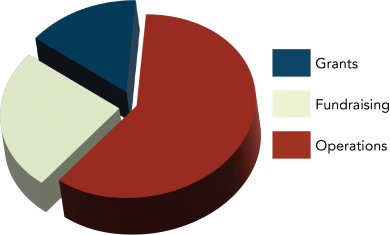
Our operations are funded approximately 60% by our own services, 15% by government grants, and 25% by fundraising initiatives and donations.
2024 Audited Financial Statement