
May 15, 2026
By Garth Doerksen, Senior Curator
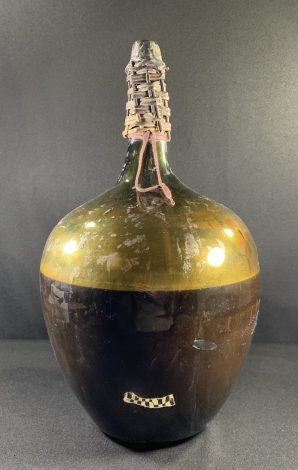
Museums are often places of certainty—spaces where artefacts are carefully labeled, stories are thoughtfully interpreted, and the past is presented with clarity. Yet behind the scenes, not every object arrives with a neat explanation. Sometimes, museums receive items that raise more questions than answers. These mysterious artefacts, stripped of context over time, offer a different kind of experience: one that invites curiosity, imagination, and even a bit of detective work.
This spirit of inquiry is at the heart of a new exhibit, Mennonite Medicine: Cures and Curiosities 1800–1950, opening Saturday, May 23, in the Gerhard Ens Gallery. Among its many intriguing objects is a large glass bottle that holds a compelling secret—one that visitors themselves are invited to help unravel.
The artefact in question is an apothecary bottle once owned by Katharina Born Thiessen (1842–1915), a remarkable midwife and practical doctor. Trained in Germany in midwifery, chiropractic, and naturopathy, Katharina brought her knowledge across continents. She practiced first in Imperial Russia (in what is now Ukraine), later in Kansas, and eventually near Winkler, Manitoba. There, she continued her work caring for families and communities until her retirement in 1907.
Katharina’s life story speaks to resilience, skill, and the vital role of community healers in a time before modern medical systems were widely accessible. Yet despite what we know about her training and work, one particular detail remains elusive. The bottle she once used—carefully preserved and passed down through her family for over a century—contains a liquid whose purpose is entirely unknown.
When the bottle was donated to the museum in 2023 by one of Katharina’s descendants, it came with valuable family history but no explanation of its contents. And so, it joins a fascinating category of museum artefacts: objects that carry history, but not certainty.
What is this mystery liquid?
Could it be an antiseptic, used to clean wounds and prevent infection in an era before antibiotics? Or perhaps a herbal remedy, prepared from local plants and traditional knowledge passed through generations? It might even have been a tonic or tea, meant to ease pain, calm nerves, or assist in childbirth.
Equally intriguing is the question of how Katharina might have used it. Was it part of her midwifery practice, offering comfort to mothers during labor? Did she carry it on house calls as a general-purpose medicine? Or was it reserved for specific treatments known only to her?
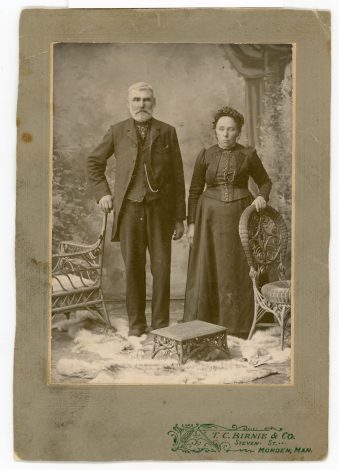
The mystery deepens when we consider the bottle’s journey through time. Why was this particular item kept so carefully for over 100 years? Families often preserve objects that hold meaning beyond their physical form. Perhaps this bottle symbolized Katharina’s skill and dedication—a reminder of the lives she helped bring into the world and the people she cared for. It may have been stored in a place of honour, tucked safely away in a cupboard or trunk and handed down as a cherished heirloom.
Now, this apothecary bottle has found a new home in the museum, but its story is still unfinished.
Visitors to the exhibit are invited to become part of the investigation. Through the interactive “Guess the Artefact” feature, you can share your own theories. What do you think the liquid is? What might Katharina have used it for? Your ideas become part of the exhibit experience, transforming a simple display case into a lively conversation between past and present.
“Mystery in a Bottle” reminds us that history is not always complete. Sometimes, the gaps in knowledge are what bring us closest to the people behind the objects. They encourage us to ask questions, consider possibilities, and connect more deeply with the lives that came before us.
As you explore Mennonite Medicine: Cures and Curiosities 1800–1950, take a moment to stand before this apothecary bottle. Look closely. Imagine its journey. And then, take your best guess.After all, the story isn’t finished yet and you might just help write the next chapter.
May 22 – 6:00 p.m. – Spring Gala Fundraising Banquet – The Mennonite Heritage Village warmly invites you to an unforgettable evening of celebration, vision, and community spirit. Join us for our annual Spring Gala, where tradition meets transformation. As we reflect on our rich heritage and honour the stories that built our foundation, we also look ahead with hope and excitement to a future full of promise. We will also officially launch the new Gerhard Ens Gallery exhibit, Mennonite Medicine: Cures + Curiosities – 1800-1950. Tickets are available by calling 204-326-9661 or online at www.mhv.ca.
May 23 – 9:00 a.m. – Mennonite Medicine: Cures and Curiosities – 1800 to 1950 opens in the Gerhard Ens Gallery.
June 19-21 – Summer in the City Waffle Booth is open. Enjoy fresh waffles with white sauce at Steinbach’s downtown festival.
Thank you for being a part of Mennonite Heritage Village.